Maintenance planners are responsible for coordinating all plannable maintenance work on their premises. There are hundreds of small tasks that need to be done to keep machinery and equipment in operating condition, especially for asset-intensive organizations such as manufacturers.
Maintenance planners coordinate maintenance personnel and available resources while ensuring jobs get done on time. In other words, they create and assign work orders for maintenance tasks and ensure the right resources are available (eg: parts and inventory) to get the job done. As such, planners are key to having an efficient asset management program.
They must establish strong relationships between key functions in the organization to avoid departmental silos, communication barriers, and increased downtime. Their goal is to reduce maintenance costs, minimize the maintenance backlog, extend asset life cycle, and increase output.
What Responsibilities Does a Maintenance Planner Have?
1. Create maintenance schedules and generate work orders
2. Maintain parts inventory
3. Create procedural manuals that explain how to do certain tasks
4. Estimate costs of labor and parts for industrial equipment
5. Adjust schedules to account for unexpected emergency work
6. Assist and support maintenance manager
7. Serve as a liaison between maintenance and operations
8. Maintain records and files essential to maintenance management
9. Coordinate with maintenance staff, contractors, and external vendors
10. Prepare preventive maintenance plans that are aligned with the organization’s maintenance goals
Maintenance managers often also lead communication between maintenance and other internal departments to ensure that everyone receives timely, efficient, and quality service. Unofficially, they must also resolve disputes between different departments. For example, say maintenance and production disagree about the urgency of a particular maintenance task. Maintenance wants to shut down a production line to do emergency maintenance while production says no way because they have a quota to meet. Part of the maintenance planner’s job is to communicate with the different departments involved and to come up with acceptable solution to the problem at hand.
The average annual salary for a maintenance planner is $72,503 according to Glassdoor or $66,847 a year according to Indeed.
What Makes a Good Maintenance Planner?
A good maintenance planner is so much more than just a scheduler. Their job is to advocate for the maintenance department, keep their employees happy, and enforce the maintenance schedule. However, they must also be adept at changing direction when emergencies arise.
Here are some essential skills that a good maintenance planner should have.
Strong communication – Strong verbal and written communication skills are essential for any good maintenance planner. Writing detailed work orders and manuals to explain complex processes is essential to maintaining safety standards in the workplace. Failure to do so can cause delays or even result in a technician missing vital safety information and risking injury.
Project management – Maintenance planners must schedule maintenance work so as not to interfere with operations or production activities. They must also use their best judgment to triage work orders in the event of an emergency or maintenance backlog. What’s more, their responsibility is to coordinate and oversee all maintenance tasks from start to finish.
Problem solving – Dealing with unexpected contingencies is commonplace in maintenance management. Solving disputes, reconciling competing objectives between internal teams, and creating emergency response plans requires the ability to think on the fly and come up with solutions.
Organization – As the person responsible for enforcing organization and timeliness with respect to maintenance tasks, maintenance planners must have extraordinary organizational skills. This means meticulously documenting maintenance tasks, assigning work orders to the right technicians, maintaining the budget, and continuously updating information in the CMMS.
Strong understanding of mechanical and engineering concepts – While maintenance planners in large organizations won’t be charged with doing maintenance tasks themselves, they must understand the job well enough to describe what needs to be done and to estimate labor hours, tools, and resources needed to complete different work orders. Prior experience as a technician or maintenance supervisor can help. They also must understand the organization’s maintenance goals and how they align with core business requirements. For example, what constitutes good OEE in the industry? Some unscheduled downtime is inevitable, but how much is too much?
Goals of the Maintenance Planner
The goal of the maintenance planner is to improve workforce productivity and quality by anticipating and eliminating potential delays. They do this by planning and coordinating labor, parts and materials, and equipment access. They know tasks well enough to describe what needs to be done and estimate the required number of labor hours. Some other specific goals on maintenance planners include the following.
Minimize the use of contract and outside resources by effectively using internal labor
Maximize technician wrench-on time while minimizing the maintenance backlog
Ensuring maintenance activities interfere as minimally as possible with operations and production activities
Reducing unscheduled downtime by using preventive maintenance
Important Tools for Maintenance Planners
To fulfill their growing list of responsibilities, maintenance planners need to have access to numerous tools and software solutions. Below is a look at some of the most important ones.
CMMS
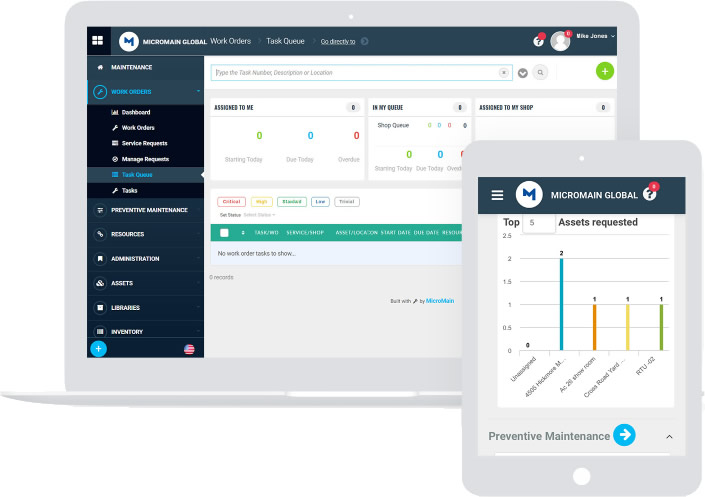
CMMS software helps make receiving work requests, creating preventive maintenance schedules, and assigning work orders to available technicians a breeze. A CMMS also enables maintenance planners to track inventory using cycle counts and provides a central repository for storing important documentation.
Shift Planning Software
Shift planning software is essential to effective workforce management. Scheduling software offers calendars that automatically update according to which workers are present or absent on a particular day and makes it easier for maintenance planners to calculate labor costs for a given shift. It also gives workers more predictability around their work schedules.
Enterprise Resource Planning (ERP)
ERP software integrates all the above software applications and makes it easy to reconcile inventory, labor, sales, marketing, and finance in one place. Maintenance planners may use ERP software to link maintenance data with other relational databases. This is what enables businesses to infer relationships between, say, the amount of downtime experienced during a fiscal year and revenue earned.
Our industry leading CMMS software helps maintenance planners manage their maintenance operations better leading to less downtime, increased productivity, and lower maintenance costs. Learn more about our CMMS today!
Large asset-intensive organizations, such as manufacturing plants definitely need a maintenance planner. Without one, preventive maintenance tasks are more prone to delay, which leads to an increase in equipment failures and a backlog of maintenance tasks. A good rule of thumb is to have one maintenance planner for every 20 maintenance team members. In a small company, the planner might take on additional responsibilities such as scheduler, materials coordinator, or procurements. In large organizations, these three roles would be separated into planner, scheduler, and materials coordinator.
For organizations that already have a backlog, maintenance planners help prioritize work orders in the backlog based on maintenance costs, available resources, and asset criticality. This helps the organization move from a costly reactive maintenance environment to one that is proactive, which saves the organization money in the long run.
Maintenance planners are often found at manufacturing plants in enterprise companies where planning maintenance work is a full-time job. They work closely with maintenance technicians and supervisors. In smaller companies, maintenance planning is overseen by maintenance managers or maintenance supervisors. As reported by the Bureau of Labor Statistics, the projected employment growth rate for general maintenance and repair workers is expected to be 6 percent through 2024.
The Importance of Maintenance Planning in Asset Management
Maintenance planning is crucial for asset-intensive organizations as it ensures that machinery and equipment operate efficiently. By strategically scheduling maintenance tasks, organizations can significantly reduce downtime, which in turn enhances productivity and operational reliability.
Effective maintenance planning not only helps in extending the lifecycle of assets but also minimizes unexpected breakdowns. This proactive approach allows organizations to allocate resources efficiently, ensuring that maintenance activities do not disrupt production operations. For instance, a well-structured maintenance plan can lead to a reduction in emergency repairs and associated costs.
Best Practices for Maintenance Planners
To excel in their roles, maintenance planners should adopt best practices that enhance their effectiveness and the overall maintenance process. This includes developing a detailed preventive maintenance schedule, utilizing technology for tracking maintenance tasks, and fostering collaboration between departments to ensure a seamless workflow.
Additionally, maintenance planners should regularly review and adjust their strategies based on performance metrics and feedback. For example, incorporating data analytics can provide insights into maintenance trends, helping planners make informed decisions that align with organizational goals and improve asset management outcomes.
Challenges Faced by Maintenance Planners
Maintenance planners often encounter several challenges that can hinder their effectiveness. These include managing a backlog of work orders, dealing with limited resources, and ensuring effective communication among various departments. Such challenges can lead to delays in maintenance activities and increased costs.
Moreover, adapting to unexpected equipment failures or changes in production schedules requires maintenance planners to be agile and resourceful. Developing contingency plans and prioritizing tasks based on asset criticality can help mitigate these challenges, allowing maintenance planners to maintain operational efficiency even in adverse situations.
The Future of Maintenance Planning: Trends and Innovations
The landscape of maintenance planning is evolving rapidly due to advancements in technology and changing industry demands. Trends such as predictive maintenance, IoT integration, and the use of AI are reshaping how maintenance planners approach their tasks and optimize asset performance.
For instance, predictive maintenance leverages data analytics to forecast equipment failures before they occur, allowing planners to schedule maintenance proactively. As organizations increasingly adopt these innovations, maintenance planners will need to embrace new tools and methodologies to stay competitive and ensure the longevity of their assets.
The Importance of Maintenance Planning in Asset Management
Maintenance planning is crucial for asset-intensive organizations as it ensures that machinery and equipment operate efficiently. By strategically scheduling maintenance tasks, organizations can significantly reduce downtime, which in turn enhances productivity and operational reliability.
Effective maintenance planning not only helps in extending the lifecycle of assets but also minimizes unexpected breakdowns. This proactive approach allows organizations to allocate resources efficiently, ensuring that maintenance activities do not disrupt production operations. For instance, a well-structured maintenance plan can lead to a reduction in emergency repairs and associated costs.
Best Practices for Maintenance Planners
To excel in their roles, maintenance planners should adopt best practices that enhance their effectiveness and the overall maintenance process. This includes developing a detailed preventive maintenance schedule, utilizing technology for tracking maintenance tasks, and fostering collaboration between departments to ensure a seamless workflow.
Additionally, maintenance planners should regularly review and adjust their strategies based on performance metrics and feedback. For example, incorporating data analytics can provide insights into maintenance trends, helping planners make informed decisions that align with organizational goals and improve asset management outcomes.
Challenges Faced by Maintenance Planners
Maintenance planners often encounter several challenges that can hinder their effectiveness. These include managing a backlog of work orders, dealing with limited resources, and ensuring effective communication among various departments. Such challenges can lead to delays in maintenance activities and increased costs.
Moreover, adapting to unexpected equipment failures or changes in production schedules requires maintenance planners to be agile and resourceful. Developing contingency plans and prioritizing tasks based on asset criticality can help mitigate these challenges, allowing maintenance planners to maintain operational efficiency even in adverse situations.
The Future of Maintenance Planning: Trends and Innovations
The landscape of maintenance planning is evolving rapidly due to advancements in technology and changing industry demands. Trends such as predictive maintenance, IoT integration, and the use of AI are reshaping how maintenance planners approach their tasks and optimize asset performance.
For instance, predictive maintenance leverages data analytics to forecast equipment failures before they occur, allowing planners to schedule maintenance proactively. As organizations increasingly adopt these innovations, maintenance planners will need to embrace new tools and methodologies to stay competitive and ensure the longevity of their assets.




 Strong communication – Strong verbal and written communication skills are essential for any good maintenance planner. Writing detailed work orders and manuals to explain complex processes is essential to maintaining safety standards in the workplace. Failure to do so can cause delays or even result in a technician missing vital safety information and risking injury.
 Project management – Maintenance planners must schedule maintenance work so as not to interfere with operations or production activities. They must also use their best judgment to triage work orders in the event of an emergency or maintenance backlog. What’s more, their responsibility is to coordinate and oversee all maintenance tasks from start to finish.
 Problem solving – Dealing with unexpected contingencies is commonplace in maintenance management. Solving disputes, reconciling competing objectives between internal teams, and creating emergency response plans requires the ability to think on the fly and come up with solutions.
 Organization – As the person responsible for enforcing organization and timeliness with respect to maintenance tasks, maintenance planners must have extraordinary organizational skills. This means meticulously documenting maintenance tasks, assigning work orders to the right technicians, maintaining the budget, and continuously updating information in the CMMS.
 Strong understanding of mechanical and engineering concepts – While maintenance planners in large organizations won’t be charged with doing maintenance tasks themselves, they must understand the job well enough to describe what needs to be done and to estimate labor hours, tools, and resources needed to complete different work orders. Prior experience as a technician or maintenance supervisor can help. They also must understand the organization’s maintenance goals and how they align with core business requirements. For example, what constitutes good OEE in the industry? Some unscheduled downtime is inevitable, but how much is too much?